
Restore Surface Protection Before the Next Temperature Swing
Sunrise Sealcoat applies professional sealcoating in Idaho Falls and surrounding areas to extend pavement life and shield asphalt from moisture and ultraviolet damage.
Sunrise Sealcoat provides sealcoating services for property owners in Idaho Falls, Blackfoot, Rexburg and surrounding areas who need to protect asphalt driveways, parking lots, and private roads from the effects of sun exposure, water intrusion, and oxidation. You'll see the need when the pavement fades from black to gray, when small cracks begin to spread, and when the surface starts to feel rough and brittle underfoot. Sealcoating restores the dark appearance and adds a protective barrier that reduces the rate of deterioration caused by freeze-thaw cycles, which are common in Eastern Idaho and accelerate surface wear.
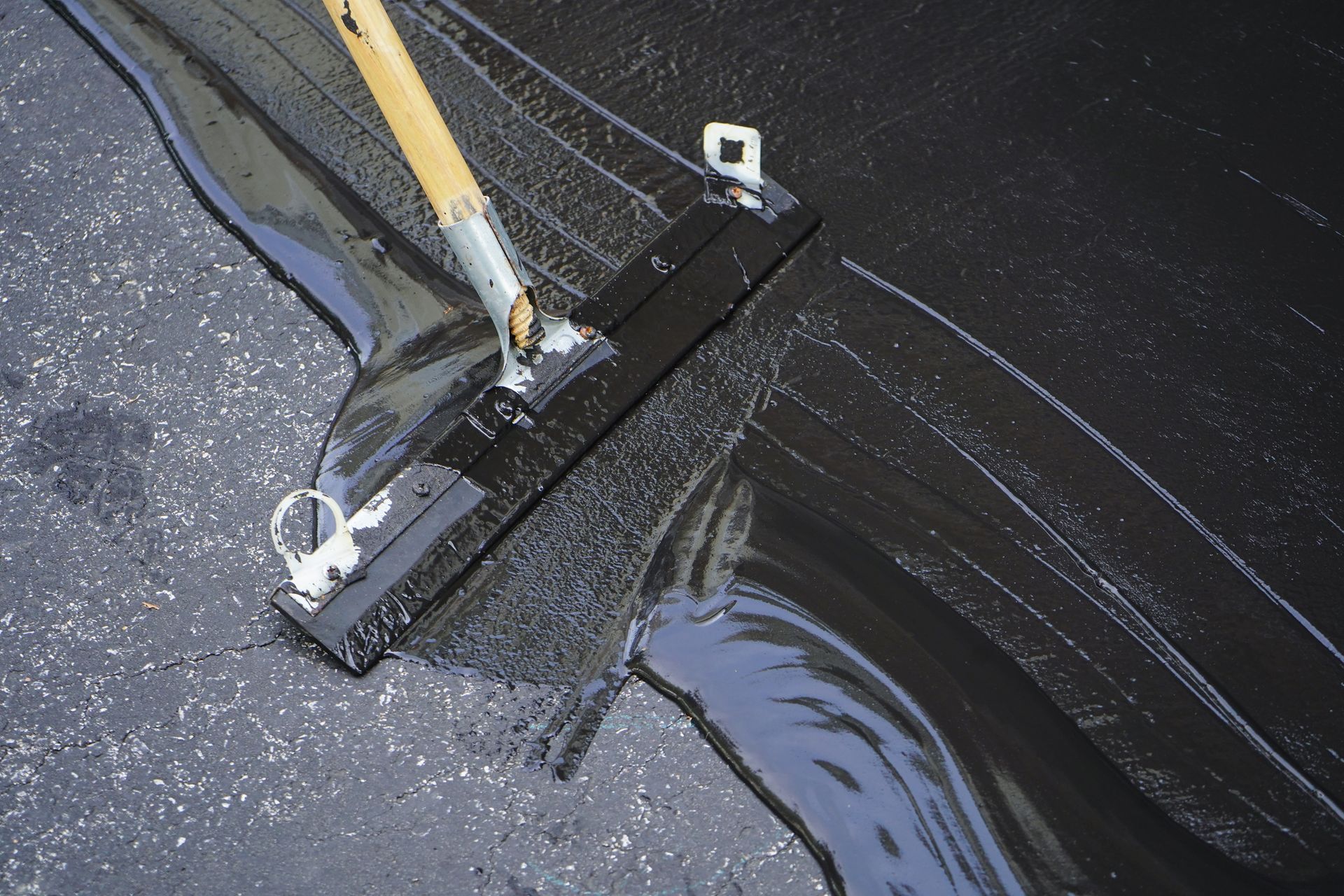
The work involves cleaning the pavement to remove dirt, oil, and loose material that would prevent the sealant from bonding properly. Cracks are filled before the coating is applied so that the surface is even and water cannot collect in gaps. The sealant is mixed on site and applied in two thin coats using a squeegee or spray system, depending on the size and texture of the area. Each coat needs time to dry before the next is applied, and the final surface requires at least 24 hours to cure before it can support vehicle traffic. Sealcoating is recommended every few years depending on how much use the pavement receives and how much direct sunlight it's exposed to throughout the day.
Book seasonal sealcoating before weather conditions shift and temperatures drop below the range needed for proper curing.
What Sealcoating Does and How It Works
You'll notice the process begins with a thorough sweep of the pavement using rotary brooms, followed by power washing or air blowing to remove embedded dirt and oil stains. Any vegetation growing through cracks is removed, and the edges are trimmed so that the sealant can cover the entire surface without gaps. The sealant itself is a blend of asphalt emulsion, water, silica sand, and polymer additives that improve flexibility and wear resistance. It's applied in overlapping passes to ensure even coverage, and the crew will avoid sealing over areas that are actively draining water or still damp from cleaning.
After the sealcoat has cured, your pavement will look darker and more uniform, and water will bead up on the surface instead of soaking in. You'll also notice that the texture is slightly smoother and that oil stains are less likely to penetrate the asphalt. Sunrise Sealcoat uses coal tar or asphalt-based sealers depending on the condition of the pavement and whether the property is residential or commercial. Both types protect against ultraviolet rays and moisture, but coal tar formulations tend to offer better resistance to fuel and oil spills.
The service works best when the air temperature is above 50 degrees and no rain is expected for at least 24 hours. Sealcoating does not repair structural damage or correct drainage problems, which require separate grading or base work. If the pavement is already severely cracked or has large potholes, those issues need to be addressed before sealant is applied.
Homeowners and business managers often want to know when to schedule the work, how long it lasts, and what to expect during and after application.
Questions Property Owners Have About Sealcoating
What does sealcoating actually protect against? It shields the asphalt from ultraviolet rays that cause oxidation, moisture that penetrates cracks and weakens the base, and chemicals like oil and gasoline that break down the binder.
How long does a sealcoat application last? Most applications last two to three years before the surface begins to fade and lose its protective qualities, depending on traffic and sun exposure.
Why is it important to clean the pavement before applying sealant? Dirt, oil, and loose material prevent the sealant from bonding to the asphalt, which leads to premature peeling and uneven coverage.
When is the best time to sealcoat in Idaho Falls? Late spring through early fall offers the most consistent temperatures and the lowest chance of rain during the curing period.
Can sealcoating be applied over old sealcoat? Yes, as long as the previous coat is still adhered and the surface is clean. If the old sealant is peeling or flaking, it needs to be removed first.
If your pavement is showing signs of fading or surface wear, schedule seasonal sealcoating now to lock in protection before the next freeze-thaw cycle begins and temperatures become too low for proper application.